Applications and advantages of tungsten wire tubing in industrial endoscopes
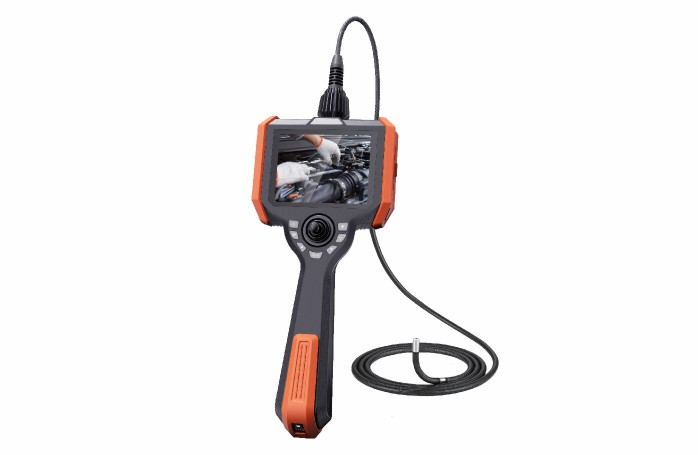
In today's increasingly sophisticated industrial production, non-destructive testing (NDT) technology has become crucial for ensuring equipment safety and operational efficiency. One type of industrial endoscope on the market, utilizing tungsten wire tubing, has distinguished itself with its unique advantages, becoming a new favorite in precision testing. So, why choose tungsten wire as the material for the endoscope tubing? What are the unique characteristics of tungsten wire?
High Temperature Resistance
Tungsten is a non-ferrous metal with a density similar to gold and a melting point as high as 3420℃, making it one of the world's most heat-resistant metals. This property allows tungsten wires to remain stable even at high temperatures, resisting deformation or melting. Therefore, in industrial endoscope applications, tungsten wire tubing can withstand the high-temperature environment inside the equipment, ensuring the normal operation of the endoscope.
Abrasion and Corrosion Resistance
Tungsten wires possess excellent abrasion and corrosion resistance. In industrial production, various chemicals and particulate matter are often present inside equipment, which can cause wear or corrosion to the endoscope tubing. The high hardness and excellent corrosion resistance of tungsten wires effectively resist the erosion of these substances, extending the service life of the endoscope.
Flexibility
The flexibility of tungsten wires is also an important reason for their selection as a material for endoscope tubing. Tungsten wires can be made into long, thin tubing with good bending properties, allowing them to easily enter confined spaces and complex pipelines. This enables industrial endoscopes to achieve comprehensive, blind-spot-free observation of the equipment's interior, improving the accuracy and efficiency of inspections.

Sources of Tungsten
Wire Tungsten wire primarily originates from the refining of tungsten ore. After crushing, grinding, and smelting, tungsten ore yields crude tungsten. Further refining and processing then produces high-purity tungsten wire. While this process is complex, it is precisely this meticulous handling of raw materials that allows tungsten wire to exhibit its superior properties.
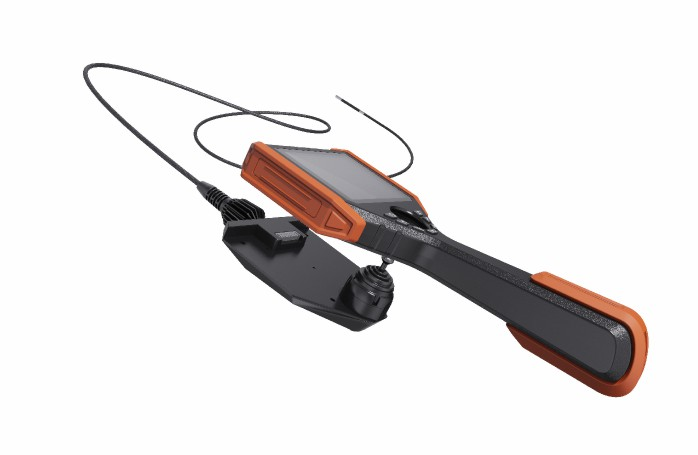
In industrial endoscope applications, the role of tungsten wire tubing is indispensable. It not only withstands high temperatures, is wear-resistant and corrosion-resistant, but also allows for flexible bending, enabling it to penetrate deep into equipment for inspection. This material choice not only improves the performance and stability of industrial endoscopes but also enhances the accuracy and efficiency of inspections. With the continuous development of industrial technology, the requirements for industrial endoscopes will become increasingly stringent. As one of the core components of endoscopes, tungsten wire tubing will continue to leverage its unique advantages, providing strong support for the safety and efficiency of industrial production.