VSNDT Fiber-Optic Borescope Ensures Stable Illumination for Aerospace Internal Inspections
Most aerospace internal inspection scenarios involve completely dark, enclosed environments—such as aircraft engine combustion chambers, sealed airframe interlayers, rocket propulsion cavities, and deeply buried thermal pipelines—where no natural light exists. Lighting system performance directly determines the ability to accurately assess internal equipment conditions and serves as a key metric for evaluating an endoscope's suitability for high-end aerospace applications. Standard endoscopes utilizing front-mounted, single-point LEDs suffer from three major drawbacks: overexposure from close-range reflections that obscure minute defects, light attenuation and darkening at the distal ends of long pipelines, and dark corners within narrow apertures. These issues frequently lead to missed inspections or misjudgments, creating safety hazards for aerospace equipment. Shenzhen VSNDT Co., Ltd has innovatively developed a rear-mounted LED fiber-optic illumination system. Combined with >1-megapixel industrial CMOS imaging, customizable probes (0.78–8mm), modular pipelines (0.5–30m), and a 360° omnidirectional articulating tip, this system stands out for its exceptional ability to deliver stable, high-definition imaging in low-light environments, making it a trusted choice for enclosed, dark-condition inspections in the aerospace industry.

The lighting limitations of traditional endoscopes with front-mounted LEDs are drastically amplified in aerospace inspection scenarios. When inspecting the cooling micro-holes of aircraft engines, a front-mounted LED sits just millimeters from the workpiece; the intense light creates strong reflections on the superalloy surface, completely masking hair-thin fatigue cracks and tiny pitting corrosion from the inspector's view. When inspecting long aerospace pipelines spanning twenty or thirty meters, light attenuates rapidly over distance, leaving the far end of the pipe pitch-black and visible only near the opening, while deep-seated corrosion and leaks remain completely undetected. In the cramped spaces of sealed aerospace composite interlayers, a single-point light source illuminates only a localized area, creating large dark corners where interlayer delamination and residual foreign objects can hide, significantly increasing the risk of missed defects. Furthermore, front-mounted LEDs are highly prone to burnout due to prolonged exposure to aviation kerosene and high-temperature environments; replacing the entire probe is costly, placing a heavy maintenance burden on aviation enterprises.

Shenzhen Vsndt Co., Ltd. P-series industrial borescope completely redesigns the light source architecture by relocating the LED module inside the main unit's handle. Light is transmitted via a high-transmittance fiber optic bundle to the probe tip, where it scatters uniformly across the entire field of view (360°), fundamentally resolving the common industry issue of uneven illumination associated with front-mounted LEDs. In close-range inspections of ultra-fine holes (0.78mm), soft, cool light evenly illuminates the inner walls without harsh glare or localized dark spots; burrs and micro-cracks are clearly visible, ensuring defects are not obscured by intense light. During deep inspections of aerospace pipelines up to 30 meters long, the fiber optic bundle ensures minimal light loss, delivering uniform illumination to the far end; details such as corrosion pits, weld porosity, and sediment layers remain clearly distinguishable without the need for external lighting, allowing a single operator to scan the entire pipeline. For inspections in dark, enclosed spaces like combustion chambers or aerospace compartments, the system offers multi-level linear brightness adjustment; operators can fine-tune settings based on material and distance—lowering brightness for aluminum or superalloys to prevent glare, or increasing it for dark, rusted walls to improve clarity—making it suitable for a wide range of aviation materials.

The combination of fiber optic light transmission and a cool light source makes the system ideal for aviation environments involving flammable or explosive materials. Heat is concentrated in the rear main unit, ensuring the probe tip remains cool throughout operation; contact with aviation fuel, rubber seals, or composite materials generates no heat, eliminating risks of fire or thermal damage to components and complying with safety standards for confined-space operations. The fiber optic bundle utilizes specialized, bend-resistant, and corrosion-resistant materials, encased in a protective tungsten-wire braid; the cable withstands tens of thousands of flex cycles without damaging the fibers. Compared to borescopes with front-mounted LEDs, maintenance frequency is reduced by 70%, significantly cutting equipment downtime for aviation enterprises. At the imaging level, the system utilizes industrial-grade CMOS image sensors, with all camera models offering a resolution of at least 1 megapixel; high-end custom models feature upgraded high-sensitivity chips and high dynamic range (HDR) imaging to balance details in both bright and dark areas. Even under fiber-optic cold light illumination, colors—whether of oil stains, metal, or composite materials—are rendered accurately, and micron-level defect visibility is maximized. A 360° omnidirectional motorized articulation head ensures the fiber-optic light beam rotates in sync with the probe, providing continuous, uniform illumination around corners and into blind spots without sudden fluctuations in brightness; this ensures stable image quality during continuous defect photography and video recording. Image files can be exported directly for use in official airworthiness inspection and aerospace/defense quality control reports, with inspection data fully traceable.
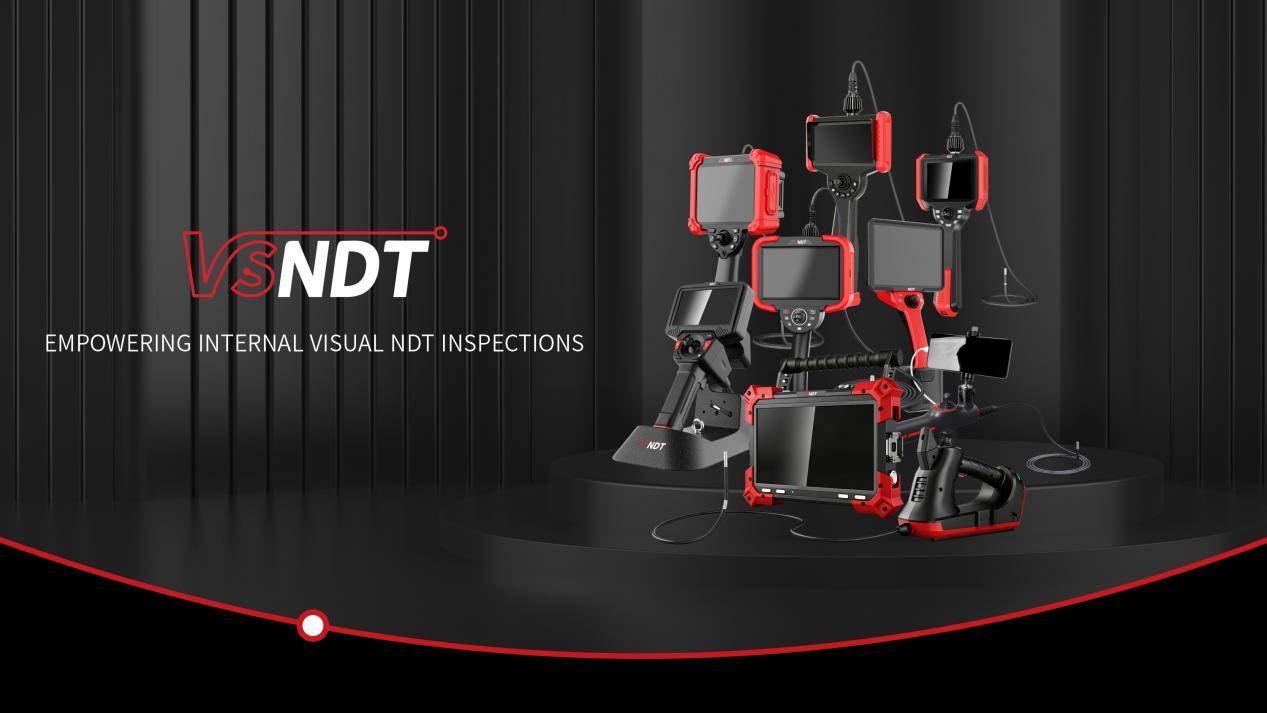
Hardware specifications can be freely configured to suit the full range of low-light inspection scenarios in the aviation industry: a 0.78mm ultra-fine probe with a 0.5m short insertion tube for precision low-light quality checks of engine micro-holes; a 2–4mm general-purpose probe with a 1–10m standard tube for inspecting airframe interlayers and small-to-medium pressure vessel cavities; and a 6–8mm robust probe with a 10–30m custom extended tube for deep, low-light exploration of aerospace storage tanks and long-distance thermal pipelines. The modular main unit is compatible with all probe and tube specifications, allowing aviation enterprises to cover all low-light inspection tasks with a single system, eliminating the need to purchase multiple endoscopes.
For a long time, the market for high-end endoscopes capable of uniform fiber-optic light transmission and low-light imaging was dominated by imported brands. These units cost hundreds of thousands, and if the fiber-optic component was damaged, the entire probe had to be replaced—incurring repair costs exceeding ten thousand yuan and delivery lead times of several months. As a domestic manufacturer with in-house R&D capabilities, Shenzhen Vsndt Co., Ltd. employs a modular design where fiber-optic light transmission components are detachable, allowing for the independent replacement of fiber bundles. Repair costs are just one-fifth of those for imported equipment; standard models are available from stock, custom tubes have short delivery times, and dedicated after-sales technical teams are stationed in key aviation industry regions to ensure rapid fiber-optic repair and replacement, preventing delays to scheduled maintenance or production quality checks. Accurate insight into the internal condition of equipment is crucial for ensuring production quality and safety, and stable, clear imaging within dark, enclosed cavities serves as the fundamental basis for such comprehensive inspection. Vsndt stands out through its exceptional, all-around performance—featuring patented rear-mounted LED fiber-optic illumination, high-definition CMOS imaging, fully customized hardware specifications, and 360° inspection capabilities with no blind spots. The company perfectly addresses the challenges of inspecting dark, enclosed environments in the aerospace sector; its stable, clear, and safe low-light imaging performance has earned the deep trust of domestic aerospace manufacturers, civil aviation MRO providers, and aerospace research institutes, while its homegrown optical technology safeguards the safety of production and operations across my country's aerospace industry.