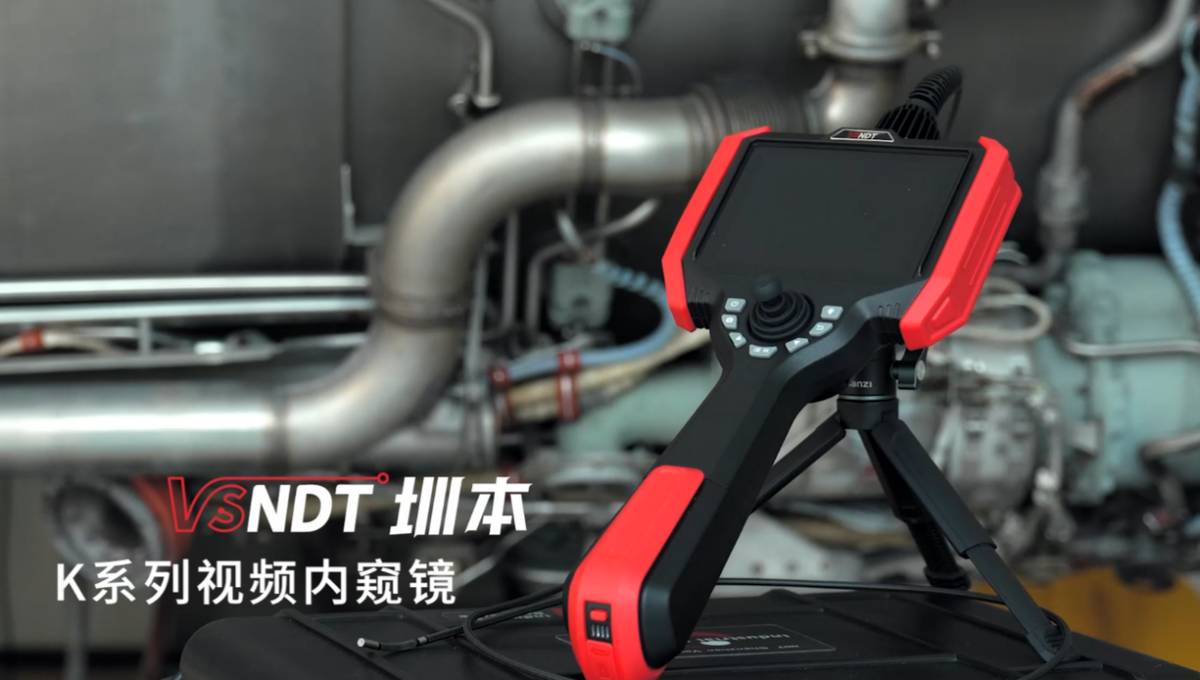
Fully Sealed Three-Proof Design: VSNDT Industrial Endoscopes Empower NDT in High-Risk Chemical Environments
Equipment maintenance and inspection for petrochemical, fine chemical, coal chemical and other industries have long represented high-risk challenges in the industrial inspection field. Chemical operation sites are persistently confronted with complex working conditions, including high temperature and high pressure, toxic and hazardous media, oil contamination & corrosion, dust accumulation, as well as confined and dim spaces. Core facilities such as chemical reactors, pressure storage tanks, oil and gas transmission pipelines and chemical heat exchange equipment feature harsh internal environments and enclosed structures that cannot be accessed directly by personnel. traditional inspection equipment suffers from inadequate protection performance, which easily leads to equipment damage, failed inspections and potential safety hazards. Not only is it difficult to accurately identify equipment defects, but equipment malfunctions may also trigger safety accidents including leakage and explosion.
The core pain points of chemical equipment inspection lie in erosion and damage to inspection equipment caused by oil contamination, water vapor and chemical dust. Chemical reactors sustain chemical medium reactions over long-term operation, with oil stains, corrosive liquids and chemical dust remaining on inner walls. The interior of such equipment is constantly humid, greasy and dusty. Residues of process media, ponding and sludge tend to accumulate at the bottom of chemical transmission pipelines and storage tanks. Ordinary endoscope probes feature wide sealing gaps, enabling rapid penetration of water vapor, oil and corrosive dust into the equipment. This leads to circuit corrosion, lens fogging, blurry imaging and short-circuit failure. Not only is inspection forced to halt, but the cost of equipment replacement also rises.
VSNDT industrial endoscopes adopt an integrated fully sealed probe structure with no assembly gaps, providing comprehensive protection against intrusion by water, oil, dust and corrosive media. Even when immersed in chemical wastewater and oily media for extended periods, or operated long-term inside highly dusty, corrosive enclosed chambers, the core components remain intact to deliver consistent and stable performance.
Most chemical equipment operates under high-temperature and high-pressure conditions, imposing stringent requirements on the pressure and temperature resistance of inspection instruments. Conventional endoscopes are only suitable for normal temperature and atmospheric pressure environments, and cannot withstand residual heat and high pressure inside chemical equipment. Improper deployment may result in probe deformation, seal failure and equipment breakdown.
The fully sealed probe of VSNDT endoscopes has undergone special optimization for industrial working conditions with highly robust sealing construction. It fits high-pressure inspection scenarios inside chemical pressure vessels, high-pressure pipelines and reactors with outstanding pressure resistance. No seal rupture or medium leakage will occur during operation. In addition, it supports wide temperature range operation, running steadily inside high-temperature chambers and residual-heat pipelines of chemical equipment. Resistant to high-temperature exposure and temperature shock, it addresses the industry-wide challenge of equipment malfunction under high-temperature inspection conditions.
VSNDT industrial endoscopes have undergone comprehensive upgrades to adapt to three major high-risk characteristics of the chemical industry: toxic substances, radiation and enclosed low-light environments. Enclosed chemical production chambers and buried pipelines often contain residual toxic and hazardous gas as well as trace radioactive media, creating extreme risks for manual close-range inspection. Ordinary equipment cannot resist erosion by hazardous substances, resulting in drastically shortened service life.
During chemical equipment inspection, the inner walls of pipelines often have protrusions, hard deposits, and welds that easily strike the probe. Conventional probes have poor impact resistance, making them prone to lens scratches and structural damage. The VSNDT probe features a high-strength, wear-resistant, and impact-resistant housing combined with an integrated reinforcement design, enabling it to withstand frequent impacts, friction, and compression. It remains durable and undamaged even in complex chemical chambers and rough pipeline interiors, making it ideal for long-term, high-frequency inspections in chemical plants. Compared to traditional equipment, this probe requires minimal maintenance and replacement, significantly reducing operational and maintenance costs for chemical enterprises. Additionally, detection data can be captured in real time through photos and video recordings, providing comprehensive data support for equipment maintenance, fault tracing, and compliance audits.
From daily inspection of fine chemical reactors to patrol checks of petrochemical oil and gas pipelines, and from hazard identification in coal chemical storage tanks to heat exchange equipment, VSNDT Industrial Endoscopes offer full-sealed, triple-protection shielding, adaptability to extreme conditions, and high stability with low wear—core advantages that perfectly match all high-risk inspection scenarios across the chemical industry. They effectively address longstanding challenges such as difficult inspections, equipment fragility, high risks, and low efficiency, helping chemical enterprises achieve safer, more precise, and efficient equipment operation and maintenance, thereby strengthening the safety defenses of chemical production.
Factory : Building 19, No. 10, Songshanhu Park, Dongguan, Guangdong, China Office : 18F, Pingshanshouzuo, Pingshan District, Shenzhen, Guangdong, China